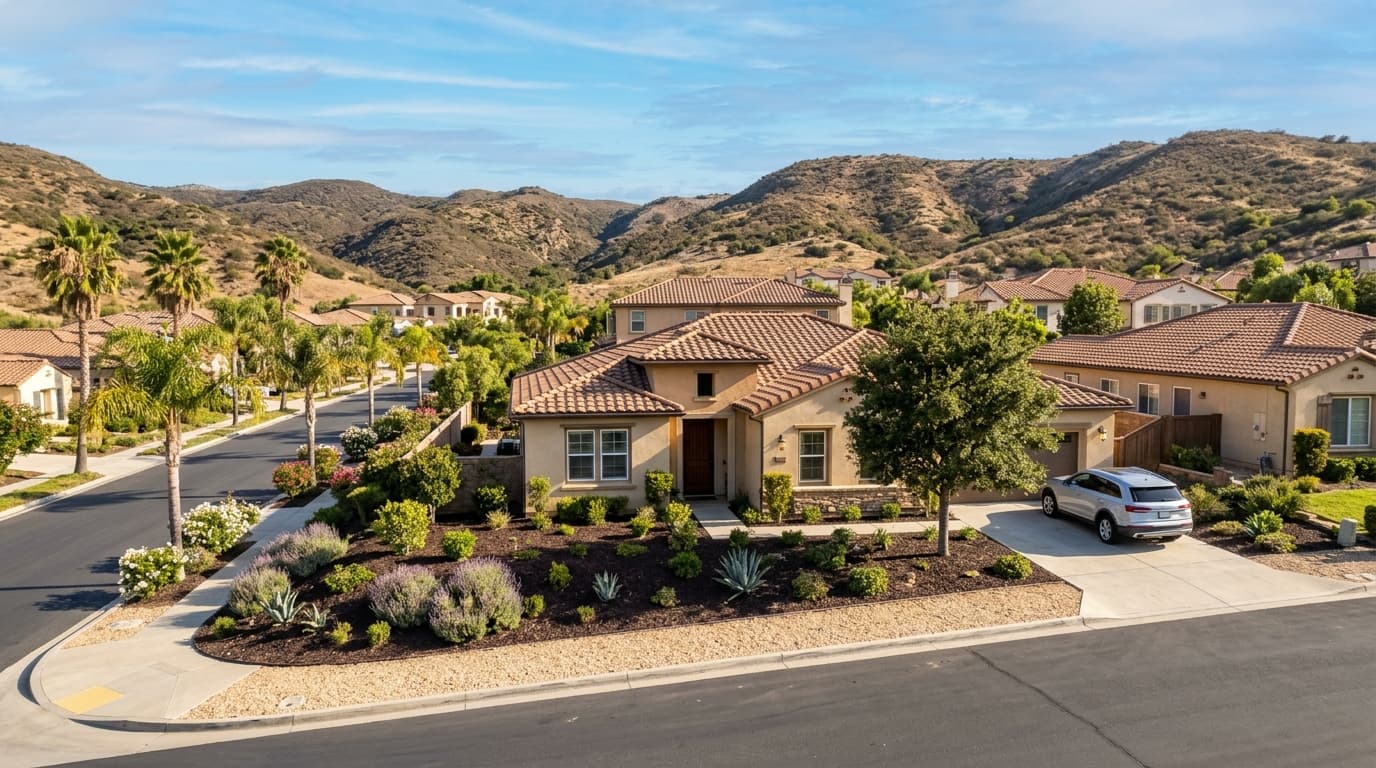
For homeowners near foothills and open land, wildfire risk is a fact of life and, increasingly, a fact of insurance. Carriers often use risk scores to decide whether they will insure a home and on what terms. One of the tools you may hear about is the Fireline score. The good news is that some of the factors behind the score are within your control, and home hardening can make a real difference.
What a Fireline Score Is
A Fireline score is a wildfire risk rating associated with a property's location and surroundings. Carriers use data like this, along with other underwriting information, to judge how exposed a home is. In the carrier guidelines we work with, lower Fireline scores, in the range of 1 to 3, are often the ones that can improve eligibility for the standard market.
Each carrier sets its own rules, and a score is only one part of the picture. A home with a favorable score is not guaranteed coverage, and a home with a higher score may still have options, such as a FAIR Plan policy with a companion DIC policy.
Why Hardening Matters
Wildfire damage to homes often starts with embers, small burning pieces that travel on the wind and land on or near a house. Hardening focuses on reducing the places where embers can catch. Even if a property's location cannot change, improvements to the home and its surroundings may help.
Please note that insurers and mitigation programs do not all recognize the same improvements, and some changes may not change your score directly. They are still worthwhile for safety.
Actionable Home Hardening Steps
Here are the steps that most often come up in conversations about wildfire risk:
- Create defensible space. Keep vegetation trimmed and spaced around the home, and clear dry brush, leaves and dead plants.
- Maintain the zone closest to the house. Keep the area right next to walls clear of combustible materials like wood piles, mulch and dry plants.
- Choose a fire-resistant roof. Class A rated roofing materials are commonly recommended, and keeping roofs and gutters clear of debris is just as important.
- Cover vents. Ember-resistant vent screens help limit how easily embers can enter the attic and crawl spaces.
- Upgrade windows and doors. Dual-pane or tempered glass and well-sealed openings can help.
- Mind fences and decks. Attached wood fences and decks can carry fire to a home, so consider noncombustible materials near the house.
Local fire departments and state agencies publish guidance on defensible space requirements, so check what applies in your area.
How This Connects to Your Premium
Some carriers offer wildfire mitigation credits or consider hardening features in underwriting. Whether you qualify for a discount, and how large it might be, depends on the carrier, the property and the applicant. We cannot promise a specific reduction, and improvements are not a guarantee of a better score or lower price. What they can do is strengthen your case with underwriters and help protect your home.
Where We Come In
Understanding where you stand is the first step. We Listen & Learn about your property, location and any work you have done. We Tailor Your Plan by checking which of our 12+ appointed carriers may be a fit, and We Stand By You as your situation changes. If you do the work, we can help you present it clearly. Keep receipts, photos and permits, since documentation can matter.
Request a Free Property Risk Assessment
If you want to know where your home may stand, request a free property risk assessment and quote here. Our review is no-pressure, and you are welcome to visit our Midway City office in Orange County. This article is general information, not legal, tax or financial advice, and eligibility and pricing vary by carrier, property and applicant.
Educational information, not advice
This article is general educational information, not insurance, tax, legal or investment advice, and it is not an offer of coverage. Coverage, benefits, rates and eligibility depend on the policy terms, underwriting and carrier approval, and no coverage is in force until confirmed in writing by the carrier. Ben Van Cat is a licensed California Insurance Producer, License #0J13438. See our disclosures.